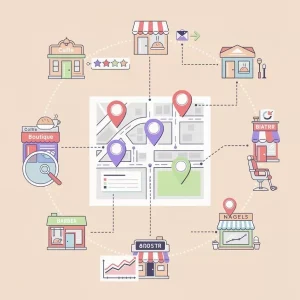
In today’s digital landscape, small businesses must optimize their online presence to remain competitive. One of the most effective ways to attract local customers is through small business SEO, specifically local SEO.
With the right local marketing strategies, businesses can improve their local search ranking factors and gain visibility in local search results.
This guide provides a comprehensive step-by-step approach to implementing local SEO tips that can help small businesses thrive.
What is Local SEO?
Local SEO is the process of optimizing a business’s online presence to attract more traffic from relevant local searches.
As the name suggests Local SEO is a process through which businesses optimise their online presence to attract more traffic from local searches.
These searches often include terms like “near me” or specify a location and usually, they occur on search engines like Google.
Local SEO involves strategies like optimizing Google Business Profile (GBP), creating locally relevant content, acquiring local citations, and managing online reviews.
How Local SEO Works
Now that we have understood what local SEO is, let’s have a look at how local SEO works.
- Google Business Profile Optimization – Google My Business Profile optimization is one of the most important tasks. It ensures that your business appears in local search results and Google Maps
- On-Page SEO – While doing your on-page SEO activities you should also focus on location-based keywords in your website content, title tags, and metadata. This way the chances of your website rankings in local searches increases.
- Local Citations – There are lots of business directories on the internet, it is important that you get your business listed in directories like Yelp, Yellow Pages, and local business listings.
- Reviews and Ratings – It is important that you regularly manage and respond to customer reviews as it will help you to build trust and credibility. Also, businesses with good reviews rank higher in relevant search results.
- Backlinks from Local Sources – Backlinks also help in increasing your authority and rankings. Therefore you should focus on getting links from local blogs, news sites, and business directories to boost local authority.
Benefits of Local SEO For Small Businesses
Now that you’ve understood what Local SEO is and how it works it’s time we have a look at how small businesses SEO strategies can help your business:
1. Increased Online Visibility
Local SEO helps businesses to rank higher in local search results and increase their visibility. This way they can attract more customers who are looking for a particular product or service in their local area. Local SEO helps you attract foot traffic and increase your offline and online conversions.
2. More Foot Traffic to Physical Stores
For physical stores who rely on foot traffic a good Local SEO strategy is nothing short of a blessing. With proper optimization, offline stores can significantly increase in-store visits, as customers find your business easily through local searches.
3. Enhanced Customer Engagement
Google’s business profile also provides you with an opportunity to interact with your customers. Businesses can connect with their audiences by responding to reviews, and sharing locally relevant content fosters trust and customer loyalty
4. Higher Conversion Rates
Local searches generally indicate high purchase intent from the users. This means users looking for services nearby are more likely to convert into customers. Therefore ranking on relevant search results can help you to increase conversion and sales.
5. Competitive Edge Over Larger Brands
While it’s hard for small businesses to rank globally and compete with large brands. However, you can compete with larger brands by focusing on specific geographic areas. With proper local SEO, you can rank higher in your local niche and out-rank big brands.
6. Cost-Effective Marketing Strategy
Compared to traditional advertising, local SEO provides a more affordable way to reach potential customers, driving organic traffic without the need for large marketing budgets.
A Step By Step Guide For Doing Local SEO for Small Businesses
Now that we have discussed what Local SEO is and why is it important for your business let’s have a look at some steps that can help you in improving your overall Local SEO strategy:
Step 1: Optimizing Google Business Profile (GBP)
Google Business Profile (formerly Google My Business) optimization is very important for small businesses SEO.
GBP helps businesses to rank higher on local search and Google Maps. Furthermore, visitors also prefer information-rich Google business profiles as they instil a sense of credibility and trust. Therefore, you should thoroughly optimize your GBP listing by:
- Start by claiming and verifying your listing on Google Business Profile.
- Once you have made your profile make sure to add all the business details such as name, address, phone number (NAP), website, and business hours.
- It is important that you describe your business as it helps search engines to place and rank your profile better. So choose relevant categories.
- Make sure to add high-quality images and videos related to your business as it makes the profile look professional. Also, avoid stock photos and upload original ones.
- You should also encourage customer reviews on your profile and respond to them promptly in order to make your profile look more authentic.
- Use local search keywords on your description and posts.
Step 2: On-Page SEO for Local Businesses
On-page SEO plays an important role when it comes to ranking the website. By properly optimising your on-page strategy you can increase your website’s visibility on local searches.
There are lots of elements to consider in On-page SEO, so below we have discussed some local SEO tips to optimize your web pages:
- While writing title tags and meta descriptions for your pages you should include location-based keywords.
- Google prioritises structured content when it comes to search rankings. Therefore you should use header tags and add relevant keywords in your headings.
- You should keep your URL structure short and it should contain the target keyword.
- Schema and structured data help search engines to understand your website layout and your business information so make sure to add it.
- Large amounts of web traffic come from mobile phones therefore make sure that your website is mobile responsive and fast loading.
Step 3: Creating Locally Relevant Content
Content is king, and for small business SEO, locally focused content helps establish authority and attract customers.
When it comes to SEO content is king. For small business SEO it is very important to produce locally focused content. It helps you to establish authority and attract customers.
Furthermore, quality and relevant content also rank higher in search results which helps you in driving organic traffic towards your business. So let’s have a look at the types of local content that you can create.
- Blog Posts: Write about local events, news, or industry trends.
- Case Studies & Testimonials: Showcase customer success stories from your area.
- Local Guides: Create city or neighbourhood guides related to your industry.
- FAQ Pages: Address common customer inquiries using local search ranking factors.
Step 4: Building Local Citations and Listings
Citations refer to the mention of your business’s name, address, and phone number (NAP) on other websites.
Citations on reputed websites or local business directories can help increase credibility and trust around your business. Furthermore, by maintaining consistent citations you can improve your local search ranking factors. Below are some of the places where you can rank your business:
- Google Business Profile (Essential)
- Bing Places for Business
- Yelp, Yellow Pages, and other directories
- Industry-specific directories (e.g., Houzz for home services, Zomato for restaurants)
- Local Chamber of Commerce and business associations
How to Manage Citations Effectively
- Make sure that your NAP information is consistent across all platforms. This way it looks professional and also instills trust amongst customers.
- Keep monitoring your citations and if there’s something incorrect make sure to rectify it.
- Tools such as Moz Local or BrightLocal can help you to track your citations. This way you you can use these opportunities to add your backlinks.
Step 5: Managing Online Reviews and Ratings
Customer reviews play an important role when it comes to Local SEO. Not only do they help you to rank higher in relevant search results but also make your business look credible.
Regularly responding to your reviews be they positive or negative helps you build and good reputation. Below are some of the best practices related to reviews:
- Always encourage your customers to leave positive reviews on your Google profile.
- Make sure to respond to all the reviews in a professional way be it a positive or negative review. This puts your business as a responsible one.
- Make sure to address complaints quickly as it helps in building trust and customer loyalty.
- Actively use Google posts and updates to engage with your customers.
Step 6: Implementing Local Link-Building Strategies
Backlinks play an important role in increasing your business’s authority. Getting backlinks from reputable local sources can boost your small business SEO efforts.
Backlinks help search engines to determine the credibility of the site and based on that the website gets ranked. Below we have discussed some of the effective backlink strategies:
- You can partner with local businesses and exchange links with each other this way you both gain something.
- You can also sponsor or collaborate with local events or charities to get featured on their websites.
- Try to guest post on local blogs and news websites as it can help you gain some solid backlinks.
Step 7: Using Social Media for Local SEO
Social media is a great way to gain visibility for businesses. With the right strategy, you can divert quality traffic towards your website. So below are some of the tips on how to use social media for local SEO:
- Optimize profiles with business location details.
- Engage with the local community through posts and comments.
- Share user-generated content and customer testimonials.
- Promote local events and promotions.
Step 8: Tracking and Measuring Local SEO Performance
In order to ensure the success of your local SEO activities it is important to continuously track and monitor your performance.
By continuous tracking, you can refine and improve your local marketing strategies. Below are some of the tools that you can use to track local SEO:
- Google Analytics: Track website traffic and user behaviour.
- Google Search Console: Monitor search performance and technical SEO issues.
- Google Business Profile Insights: Analyze customer interactions.
- Local SEO Audit Tools: Use BrightLocal, Moz Local, or SEMrush for audits.
Implementing small business SEO strategies is essential for local businesses to thrive in today’s digital world.
By following these local SEO tips, from optimizing your Google Business Profile to building local citations, managing reviews, and leveraging social media, you can improve your local search ranking factors and attract more local customers.
Keep monitoring and refining your local marketing strategies to stay ahead of the competition and ensure long-term success.
Frequently Asked Questions
How long does it take to see results from local SEO?
Local SEO results can vary based on factors like competition, business location, and optimization efforts. Generally, businesses start seeing noticeable improvements in search rankings and traffic within 3 to 6 months of consistent local SEO implementation.
Do I need a website for local SEO, or is a Google Business Profile enough?
While a well-optimized Google Business Profile (GBP) can improve local search visibility, having a website strengthens your online presence and credibility. A website allows you to create location-based content, implement on-page SEO, and gain more control over customer interactions.
What are the most important ranking factors for local SEO?
Key ranking factors for local SEO include Google Business Profile optimization, local citations, online reviews, on-page SEO with location-based keywords, backlinks from local sources, and website mobile-friendliness.
How can I encourage customers to leave reviews for my business?
Encourage reviews by providing excellent service, asking satisfied customers to leave feedback, sending follow-up emails with review links, and offering incentives like discounts or loyalty points for reviews. Always respond to reviews to show engagement.
Is social media important for local SEO?
Yes, social media helps increase local brand awareness and engagement. Platforms like Facebook, Instagram, and LinkedIn allow businesses to share local content, interact with customers, and generate social signals that contribute to local search rankings.
Can I do local SEO myself, or should I hire an expert?
Small business owners can handle basic local SEO tasks like optimizing their Google Business Profile, getting local citations, and managing reviews. However, hiring an expert or agency can be beneficial for advanced strategies like technical SEO, link building, and data tracking for better results.