Most businesses treat link building like a favour they’re owed. They publish a page, wait, and wonder why nothing moves. Meanwhile a competitor with a weaker product keeps showing up first on Google, and now gets named inside ChatGPT and Perplexity too.
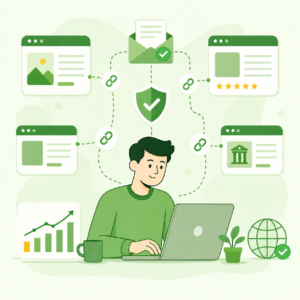
The gap is almost always the same: backlinks. Links from other sites are still one of the strongest signals that you’re worth ranking, and in 2026 they also shape which sources AI assistants trust and cite. The good news is you can earn them without buying a single one.
Here’s exactly how backlinks work in 2026, what makes one valuable, why buying them backfires, and seven white-hat ways to earn links that lift both your Google rankings and your AI citations.
What is a backlink, and why does it still matter?
A backlink is a link from another website to yours. Search engines have read links as votes of confidence since the very beginning: when a credible, relevant site links to your page, it’s vouching for you. Pages with more of those trusted votes tend to rank higher.
Two things make backlinks worth your attention this year:
- They’re still a top ranking signal. Content and technical SEO get you in the game; authority from links usually decides the top few positions for competitive terms.
- They now drive AI citations. AI Overviews, ChatGPT, Perplexity and Gemini lean on sources that are widely referenced and verifiable. Pages other trusted sites link to are far likelier to be pulled into an AI answer, with your brand named as the source.
So link building is no longer only an SEO tactic. It’s an Answer Engine Optimization (AEO) and Generative Engine Optimization (GEO) tactic too. Earn the link once; benefit in classic search and in AI answers.
What makes a backlink valuable?
Not all links are equal. One editorial link from a respected industry site can outweigh hundreds of throwaway links. Judge a potential backlink on five things:
- Relevance. A link from a site in your topic or industry carries the most weight.
- Authority. Links from domains that are themselves widely trusted pass more value.
- Editorial placement. A link inside real body content beats one stuffed in a footer, sidebar or paid directory.
- Dofollow status. A normal link passes authority; a nofollow, sponsored or ugc link passes little to none.
- Diversity. Fifty links from fifty relevant domains beat fifty links from one site.
A simple gut check: would you be glad to have this link even if Google didn’t exist, because a real, relevant audience will click it? If yes, it’s a good link.
Why you should not buy backlinks
The tempting shortcut is to buy links or rent a package of them. Resist it. Here’s the honest maths:
- It breaks the rules. Google’s link-spam policy explicitly targets links meant to manipulate rankings, including buying and selling links that pass authority, and private blog networks (PBNs).
- The downside is brutal. Detection means a manual action or algorithmic demotion: lost rankings, lost traffic, and a slow recovery that costs far more than the links ever did.
- The quality is usually poor. Sold links tend to come from low-value, over-optimised sites that pass little real trust.
- AI won’t reward it. Answer engines cite sources with genuine authority. A network of paid links doesn’t build the real credibility they look for.
Everything below earns links editorially, the only kind that’s safe, durable, and equally good for rankings and AI citations.
How to get backlinks: 7 white-hat tactics that work in 2026
1. Reclaim unlinked brand mentions
Plenty of sites already mention your brand, product or founder by name without linking. These are the warmest leads in link building. Search for your brand name (minus your own domain), find the mentions, and send a short, friendly note asking them to make the mention a link. Hit-rates here beat every other tactic.
2. Close the competitor link gap
The sites linking to your competitors are, by definition, willing to link to businesses like yours. Pull your rivals’ backlink profiles, filter for relevant, high-authority domains that link to them but not to you, and pitch those sites your better or more current resource.
3. Run digital PR and expert commentary
Journalists and bloggers constantly need quotes, data and expert opinion. Answer source requests (HARO-style services), pitch original data or a strong point of view, and you can earn links from genuinely authoritative sites, the kind that also feed AI answers.
4. Guest post on real, relevant publications
Guest posting still works when it’s done for the audience, not the link: a genuine article, on a real publication your customers read, with a natural link back where it’s useful. Avoid “write for us” farms that publish anything.
5. Build linkable assets
The most scalable link building is content people want to cite: original research, a free tool or calculator, a definitive guide, a statistics page, a template. Create the asset once, then promote it. Every citation is a link you didn’t have to ask for, and prime AI-citation bait.
6. Resource-page and broken-link outreach
Many sites keep curated “best resources” pages. If your page genuinely belongs, ask to be added. A close cousin: find broken links on relevant pages and offer your working resource as the replacement. You’re doing the owner a favour, which lifts your success rate.
7. Leverage partnerships and testimonials
Suppliers, integration partners, associations and happy customers are all natural link sources. Offer a testimonial (companies love publishing them, with a link back), get listed on partner and integration pages, and join directories people actually use.
A simple, repeatable outreach process
- Pick one page to promote. The page whose ranking or citations you most want to lift.
- Build a prospect list. Gather relevant domains from the tactics above and score them by authority and relevance.
- Find the right contact. The editor, author or marketing contact, not a generic inbox where possible.
- Personalise the pitch. Reference their actual content, explain the specific value your link adds for their readers, and keep it short.
- Follow up once, politely. A single respectful follow-up roughly doubles replies. Then move on.
- Track and verify. Log every send, and check the link went live and is dofollow.
How backlinks help you get cited by AI
Answer engines don’t just paraphrase the web, they cite sources. Which sources? Overwhelmingly ones that are verifiable and corroborated by other trusted sites. Backlinks are a direct signal of that corroboration.
To turn earned links into AI citations, pair link building with your AEO/GEO basics: answer the question directly in the first sentence of a section, add FAQ and structured data, publish an llms.txt, keep a consistent brand entity, and earn links to those exact pages so they carry the authority an answer engine looks for. Do both together and the same page ranks in classic search and shows up, named, inside AI answers.
Common backlink mistakes to avoid
- Buying links or using PBNs — the fastest route to a penalty.
- Chasing volume over quality — a hundred spammy links can hurt; five great ones help.
- Over-optimised anchor text — exact-match keywords on every link look manipulative.
- Ignoring relevance — an authoritative link from an unrelated niche does little.
- One-and-done — link building compounds; a steady, ethical program wins.
- Never verifying — links get removed, turned nofollow, or break. Check periodically.
Want the outreach done for you, safely?
Earning links is simple in theory and tedious in practice: finding prospects, checking their authority, tracking down contacts, and writing a personal pitch for each. If you’d rather hand that to a team that runs this process every day, our SEO and link-building service finds relevant, high-authority prospects, scores them, and runs personalised, white-hat outreach, so you get links that actually move rankings and AI citations, without the risk of buying them.