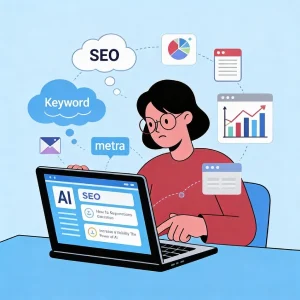
AI is transforming on-page SEO in 2026, offering unparalleled tools and strategies to boost traffic and visibility. By leveraging AI for keyword research, content optimization, and automation, businesses can stay ahead in the competitive digital landscape. Whether you’re a seasoned marketer or a beginner, integrating AI into your SEO efforts is essential for success.
On-Page Technical SEO Automation Using AI: Stop Doing Boring Work
The biggest gift from AI is automation. AI SEO tools have made life easy for marketers. Using AI, you can simplify complex on-page SEO tasks, allowing you to focus on strategy and creativity. Let’s have a look at how you can do the same:
Schema Markup
Schema Markup, also known as structured data, helps search engines understand the information on websites better and rank them accordingly.
AI SEO tools such as Schema Pro can automatically generate your website’s schema and help improve its search engine visibility and rich snippet eligibility.
Page Speed Optimization
Your page speed plays an important role in determining SERP rankings. You can use various AI tools to identify factors affecting your page speed, such as large images or unused CSS.
Based on this, you can improve your website’s speed and rankings. Not only that, improved speed also leads to increased user satisfaction and reduces bounce rate.
Image Optimization
Images can affect your website’s loading speed if not optimized properly. AI on-page SEO tools such as ShortPixel and TinyPNG can help you compress your image size without losing quality and enhance overall website speed.
Meta Tag Generation
Meta titles and meta descriptions play an important role when it comes to increasing rankings and CTR. You can use AI tools to automate the creation of meta titles and descriptions that align with search intent.
Content Creation
Content is an important part of On-page SEO. AI tools such as Jasper and Copy.ai can help you create high-quality SEO-optimized content for your website.
These tools can generate content in bulk to satisfy all your content needs. Furthermore, AI tools can also help you with internal linking to further increase your content quality.
Content Optimization Using AI
Writing content is not just enough; in order to improve your rankings, you’ll also need to optimize your content as per required SEO guidelines. Quality content not only ranks higher but also helps in increasing user engagement and satisfaction. Here’s how you can use AI tools to streamline your whole content optimization process:
Improve Readability
AI tools such as Grammarly and Hemingway help you improve the clarity and tone of your content. Using these tools, you can ensure that your content is engaging, easy to understand, provides value, and is accessible to a wide range of audiences.
Quality content not only increases engagement but also helps you rank higher on relevant search results.
Keyword Density
It is generally advised that keywords should constitute 1-2% of the total content in order to rank better; however, sometimes, while writing content, we may ignore this limit and overstuff keywords or not use them at all.
This can negatively impact the rankings of the content. Therefore, AI SEO tools such as Yoast SEO and Rankmath analyze your content to ensure that you have enough keywords that appear naturally and are distributed effectively.
Semantic Search
With the increase in the use of voice searches, there is a need to optimize your content for voice queries or semantic searches so that they can perform well.
AI on-page SEO tools such as Clearscope can help you optimize content. It ensures that your content aligns with the search engine algorithm by integrating semantic keywords, i.e., long-tail and short-tail keywords.
What Is Bulk Content Optimization and How To Use It?
As the name suggests, bulk content optimization focuses on improving multiple web pages or content pieces at a single time. It uses AI to handle vast amounts of data and analyze multiple web pages to ensure that every single page is finely tuned as per the latest search engine algorithm. This way, you can save large amounts of time and ensure consistency.
Batch Content Analysis
AI tools can scan large volumes of content or your complete website in one go. This way, they can identify issues such as duplicate content, meta tag errors, and thin pages. These issues can significantly affect the website’s performance.
Keyword Updates
AI tools such as Marketmuse and BrightEdge analyze the whole website and update necessary keywords across different pages. This can help you match evolving trends and save lots of hard work on manually updating content.
Consistency Checks
By using AI tools for bulk content optimization, you can ensure consistency in tone, branding, and formatting across your website. This way, you can reinforce your brand identity and provide a professional experience to your viewers.
Top Tools for Bulk Content Optimization
- MarketMuse: By using MarketMuse, you can automate your bulk keyword updates, and it can also perform in-depth content gap analysis to improve your overall performance.
- BrightEdge: BrightEdge is a powerful AI tool that provides you with actionable suggestions for large-scale website optimization.
- Screaming Frog: It is a great tool for finding out technical and on-page SEO issues for the complete website in a single go.
- Ryte: Monitors website performance and recommends fixes for multiple pages.
How To Use ChatGPT For On-Page SEO: (Best Prompts For ChatGPT)
ChatGPT is currently the best multipurpose artificial intelligence tool. ChatGPT is a conversational model that can help you with your on-page SEO activities in the following ways:
Content Creation
By using ChatGPT, you can create high-quality SEO-optimized content for blogs, landing pages, and marketing campaigns. ChatGPT ensures that the content targets specific keywords and user intents:
ChatGPT Prompt For Content Writing: “Using WebPilot, create an outline for an article that will be 2,000 words on the keyword ‘ChatGPT SEO Prompts (example)’ based on the top 10 results from Google. Include every relevant heading possible. Keep the keyword density of the headings high. For each section of the outline, include the word count. Include an FAQs section in the outline too, based on the ‘People Also Ask’ section from Google for the keyword. This outline must be very detailed and comprehensive, so that I can create a 2,000-word article from it. Generate a long list of LSI and NLP keywords related to my keyword. Also include any other words related to the keyword. Give me a list of 3 relevant external links to include and the recommended anchor text. Make sure they’re not competing articles. Split the outline into Part 1 and Part 2.”
Meta Title and Description Writing
You can use ChatGPT to write compelling Meta Titles and Descriptions. It analyzes the content and, based on the right titles and descriptions, aims at increasing CTR:
ChatGPT Prompt For Meta Title and Description Writing: “[Add content] Create a meta description and title for this content, including the keyword [keyword]. Make it easy to read and add a CTA.”
Content Improvement
You can also use ChatGPT to improve existing content. It can help you in adding relevant keywords, increasing readability, and overall engagement of the content:
ChatGPT Prompt For Content Improvement: “[Add content] Proofread this content and remove any grammatical mistakes, typos, and other errors. Review and revise this content for SEO optimization.”
FAQ Generation
FAQs play an important role in addressing user queries and targeting relevant keywords. You can use ChatGPT to create high-quality FAQs that can improve your search rankings.
ChatGPT Prompt For FAQ Generation: “List some frequently asked questions in [industry/area]. Follow-up prompt: Write concise answers for each of these questions. Make sure to include bullet points wherever you can.”
Conclusion
AI is transforming on-page SEO in 2026, offering unparalleled tools and strategies to boost traffic and visibility. By leveraging AI for keyword research, content optimization, and automation, businesses can stay ahead in the competitive digital landscape. Whether you’re a seasoned marketer or a beginner, integrating AI into your SEO efforts is essential for success.
Frequently Asked Questions
How can AI be used in SEO?
Can I use AI to write SEO optimized content?
Which AI tool is best for SEO?
Is AI replacing SEO?
How to automate AI with SEO?
You can automate lots of different tasks using AI. All you need to do is find the right tools for the job and execute it properly.