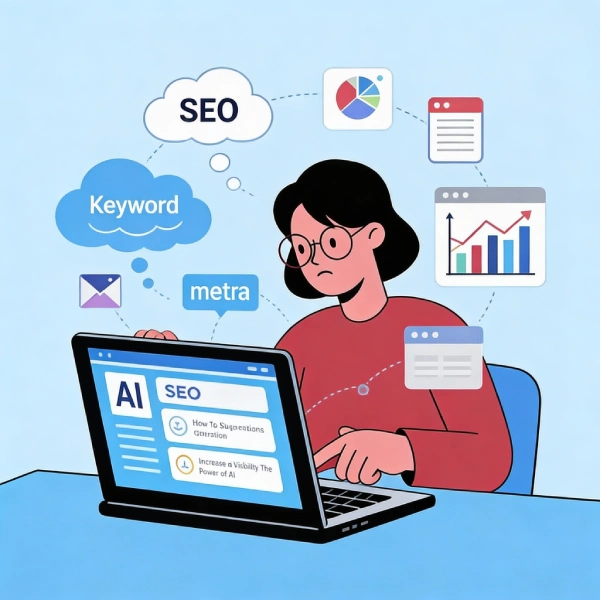
With Artificial Intelligence becoming more powerful and available, they have evolved in many different aspects in different industries. SEO is not untouched by it. AI has strongly affected search engine optimisation and helped marketers analyse large amounts of data to create the perfect SEO strategy. However, today, we’ll specifically discuss how AI can help in your keyword research in 2026 and help you rank higher in search results.
Why is AI Crucial for Keyword Research?
Earlier keyword research was a time-consuming and tedious task, and due to human limitations, sometimes corners needed to be cut. However, with the help of AI marketers, they analyse all the data that they have and can compile a list of keywords that cover you on all the grounds. With AI, you can gain a competitive edge by targeting the right keywords and understanding user intent more effectively.
How AI Tools Simplify the Process
Now that we have understood why AI is crucial for keyword research, it’s time we understand how it works:
- Search Volume Analysis: AI analytics tools such as Moz and Aherfs analyse large amounts of search volumes and completion. This way, they help you select the right keywords with the right search volumes
- Competitor Analysis: Now, with AI tools such as Semrush and Clearscope, you can analyse your competitor’s complete website in a matter of minutes. You can see the rank of their pages, what types of content they post and what keywords they use. All this data can help you in creating a better SEO strategy for your website.
- Trend Prediction: Tools like Google Trends use machine learning to predict the future popularity of keywords. This allows you to target keywords that will remain relevant over time.
Using AI for Search Intent Analysis
While writing SEO-optimised content, it is important to understand the intent of the user search. This way, you can write content that is actually helpful and has more chances to rank. Lots of AI SEO tools use Natural Language Processing to understand search intent and categorise it into informational, navigational, commercial, or transactional queries.
- Informational: Users are looking for information on a topic (e.g., “how to use AI for SEO”).
- Navigational: Users aim to find a specific page or website (e.g., “Google Keyword Planner”).
- Commercial: Users are considering a purchase (e.g., “best AI tools for keyword research”).
- Transactional: Users intend to complete a transaction (e.g., “buy SEO software”).
Using AI for Long-Tail Keyword Discovery
Tools such as SEMrush use AI to identify long-tail keywords. These keywords are very specific in nature and less competitive. However, using them judiciously can help you rank your content better. Tools like AnswerThePublic and SurferSEO analyse search queries, related phrases, and questions users ask online and provide you with target niche keywords.
AI for Semantic Search and NLP
With the evolution of voice assistants such as Google Assistant, Alexa and Siri. It has also become important for marketers to optimise their content for voice searches. Artificial intelligence uses NLP to understand the relationship between the intent of the use and the keywords used by them. AI tools such as Frase and Clearscope can help you to :
- Identify LSI (Latent Semantic Indexing) Keywords: LSI keywords are phrases related to your primary keywords that help search engines understand the content context.
- Optimise Content Structure: Use AI tools to create well-organised content with clear headings and subheadings, making it easier for search engines to interpret.
Featured Snippet Optimization
Good content with relevant keywords has a high chance of getting featured in snippets. AI tools can help you identify the right keywords to structure your content to answer common questions directly. This way, you increase the chances your content will appear in featured snippet positions.
So this is how you can use Artificial Intelligence in your Keyword Research. Using the right tools and strategy can put you miles ahead of your competitors and can really improve your visibility. Using AI, you can automate your research process and get results that are one hundred per cent thorough. So, if you’re not using AI for SEO or keyword research, then there’s still time to start using it.
Frequently Asked Questions
What is the best AI tool for keyword research in 2026?
Some of the top AI tools for keyword research in 2026 include SEMrush, Ahrefs, Clearscope, and Frase. Each offers unique features like competitive analysis, content optimisation, and trend prediction.
How does AI improve keyword research accuracy?
AI improves accuracy by analysing large datasets and identifying trends that manual research might miss. It uses NLP to understand user intent and suggests keywords that align with search behaviour.
Can AI help with optimising voice search?
Yes, AI tools can analyse voice search queries and identify conversational long-tail keywords that users often use in voice searches. This helps optimise content for voice search results.
How do AI tools use NLP for keyword research?
AI tools use NLP to understand the context and semantics of search queries, allowing them to suggest related keywords and uncover the user intent behind searches. This helps create more targeted and relevant content.
Is AI necessary for keyword research in 2026?
While not strictly necessary, using AI can significantly enhance the efficiency and depth of keyword research. It helps uncover insights faster and adapt to changes in search trends, making it a valuable tool for SEO strategies.